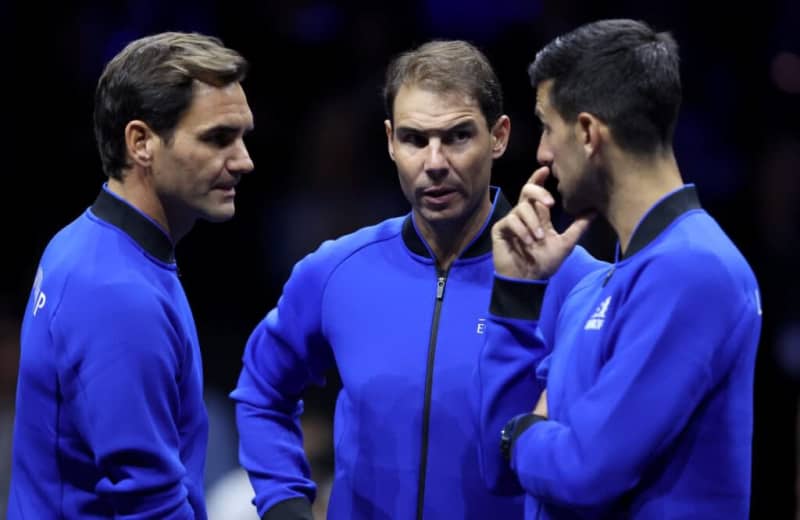
The world of professional tennis has been graced by an extraordinary era, dominated by three colossal figures: Roger Federer, Rafael Nadal, and Novak Djokovic. While the "Big Three" collectively lay claim to the sport's greatest achievements, the eternal GOAT (Greatest Of All Time) discussion often distills into a captivating, often passionate, face-off between two titans: Roger Federer and Rafael Nadal. This enduring "débat GOAT tennis" isn't merely about statistics; it's a reflection of contrasting styles, unparalleled achievements, and the very essence of what makes a champion. For fans and pundits alike, unpacking the nuances of their respective legacies is an exhilarating, if ultimately unresolvable, pursuit.
The Battle of Metrics: Slams vs. Head-to-Head Supremacy
At the heart of any GOAT debate lie the cold, hard numbers. For a long time, Roger Federer held the record for the most Grand Slam singles titles among men, a benchmark often cited as the ultimate measure of greatness. His consistent presence at the pinnacle of the sport, coupled with his widespread success across all surfaces (save for the impenetrable clay court domain of one particular Spaniard), painted a picture of unmatched versatility and sustained excellence.
However, the narrative is rarely that simple. While Federer amassed an enviable collection of major trophies, Rafael Nadal's head-to-head (H2H) record against his Swiss rival presents a compelling counter-argument. Nadal's overall winning record against Federer, particularly their encounters on clay, has long been a sticking point for those advocating for the Spaniard's GOAT status. How can the "greatest" player struggle consistently against his primary competitor?
This dynamic creates a fascinating dichotomy in the GOAT discussion:
- Grand Slams: Federer's early lead in major titles underscored his consistent dominance across eras and surfaces, showcasing his ability to peak at the most important tournaments.
- Head-to-Head: Nadal's superior H2H suggests a tactical or psychological edge, especially on his favored surface. When Nadal was in his prime on clay, even a peak Federer found him virtually unbeatable.
The question of which metric holds more weight – an overall tally of majors or direct competition outcomes – is central to the entire Slams vs H2H: What Truly Defines Tennis's GOAT Status? discussion, keeping the "débat GOAT tennis" alive and vibrant.
Surface Dominance: The Clay King vs. The All-Court Maestro
Rafael Nadal's legacy is inextricably linked to clay. His record on the red dirt is not merely impressive; it is utterly unprecedented. Witnessing Nadal lift his seventh Monte Carlo Masters title, as he has done countless times on various clay courts, leaves no doubt about his unparalleled mastery of the surface. His heavy topspin forehand, relentless physicality, and strategic genius on clay have earned him the moniker "King of Clay," a title he has defended with an iron fist, particularly at Roland Garros where he boasts an incredible number of French Open titles.
Against this backdrop, Federer's all-court brilliance shines even brighter. While he famously struggled to conquer Nadal at the French Open during the Spaniard's reign, Federer's dominance on grass (Wimbledon) and hard courts (Australian Open, US Open) demonstrated a versatility that few, if any, players in history can match. His effortless movement, elegant one-handed backhand, and exquisite serve-and-volley game allowed him to adapt and thrive across varying conditions. This adaptability is often cited as a key differentiator, showcasing an ability to win on any given day, on any given surface – provided Nadal wasn't lurking on clay.
The "Invincible" Aura and Its Impact
There was a period, particularly in the mid-2000s, where Roger Federer seemed almost invincible, sweeping aside opponents with balletic grace. The only major missing from his cabinet during those dominant years was the French Open, and the reason was almost always Rafael Nadal. Similarly, the sight of Nadal, muscles flexed, celebrating yet another clay-court victory underscored an almost impenetrable aura on his preferred surface. This perceived invincibility, whether Federer's during his peak or Nadal's on clay, significantly colors the "débat GOAT tennis," as fans weigh sustained dominance versus specialized supremacy.
Beyond the Numbers: Aesthetics, Longevity, and Impact
While statistics provide a quantifiable framework, the GOAT debate transcends mere numbers, delving into qualitative aspects that shape a player's legacy and impact on the sport. Federer, for many, represents the epitome of aesthetic tennis. His cat-like movement, the seemingly effortless power of his liquid whip forehand, and his ability to play without breaking a sweat, made him a joy to behold. He captivated audiences worldwide with a style that was both effective and beautiful, earning him legions of devoted fans who appreciated the artistry of his game.
Nadal, on the other hand, embodies raw power, relentless grit, and an unyielding will to win. His physicality, his ferocious groundstrokes, and his never-say-die attitude have redefined what it means to be a top athlete in tennis. His matches are often epic sagas of endurance and mental fortitude, showcasing a different kind of beauty – the beauty of sheer perseverance. Even if the immediate outcome of the "débat GOAT tennis" remains elusive, it’s clear both players have left indelible marks.
The Enduring Rivalry and Its Evolution
The rivalry between Federer and Nadal didn't just produce thrilling matches; it elevated the sport itself. Their clashes captivated millions, drawing new fans to tennis and pushing each other to unprecedented heights. The debate over who is the GOAT has evolved, especially as players like Nadal (and Djokovic) continued to challenge and even surpass Federer's major tallies. The question of Can Nadal Catch Federer? Reconsidering Tennis's GOAT Status has fueled countless discussions and forced a re-evaluation of what truly defines greatness.
The Evolving Landscape: Why the GOAT Debate Never Ends
The "débat GOAT tennis" is a never-ending discussion, and for good reason. Comparing players across different eras is inherently problematic; the game has evolved significantly in terms of equipment, training, and athleticism. Attempting to pit a player from the Rod Laver era against today's titans is often seen as "silly," given the vast differences in the competitive landscape. For us living in the "now," the debate focuses on contemporary legends, primarily Federer, Nadal, and more recently, Novak Djokovic, whose own formidable achievements add another layer of complexity.
Ultimately, declaring a definitive GOAT is an impossible task. Tennis, like any sport, is deeply personal. For some, the elegance and all-court mastery of Federer will forever define greatness. For others, Nadal's indomitable spirit, unparalleled clay-court records, and superior H2H against his rival make him the undeniable champion. There's also the element of personal preference: who you enjoyed watching more, whose journey resonated most deeply with you.
Appreciating the Golden Era
Instead of seeking a singular answer, perhaps the most enriching approach is to appreciate the extraordinary privilege of witnessing two, and indeed three, of the greatest athletes to ever grace a tennis court. Their rivalry has given us countless unforgettable moments, pushed the boundaries of human performance, and enriched the sport in ways that will be remembered for generations. The ongoing "débat GOAT tennis" isn't about finding a definitive winner as much as it is about celebrating the sheer brilliance of these legends.
Conclusion
The "débat GOAT tennis" between Roger Federer and Rafael Nadal is a multifaceted discussion, weaving together statistics, surface specializations, stylistic preferences, and the sheer impact they've had on the sport. While majors, H2H records, and weeks at world No. 1 offer quantitative benchmarks, the intangible qualities – Federer's effortless grace versus Nadal's gladiatorial intensity – add profound depth. There may never be a universally accepted Greatest Of All Time, and perhaps that's the beauty of it. What is undeniable is that both Federer and Nadal have carved out legacies of unparalleled excellence, inspiring millions and contributing immeasurably to the rich tapestry of tennis history. Their rivalry remains one of the sport's most cherished narratives, a testament to two champions who, in their own unique ways, have transcended the game.